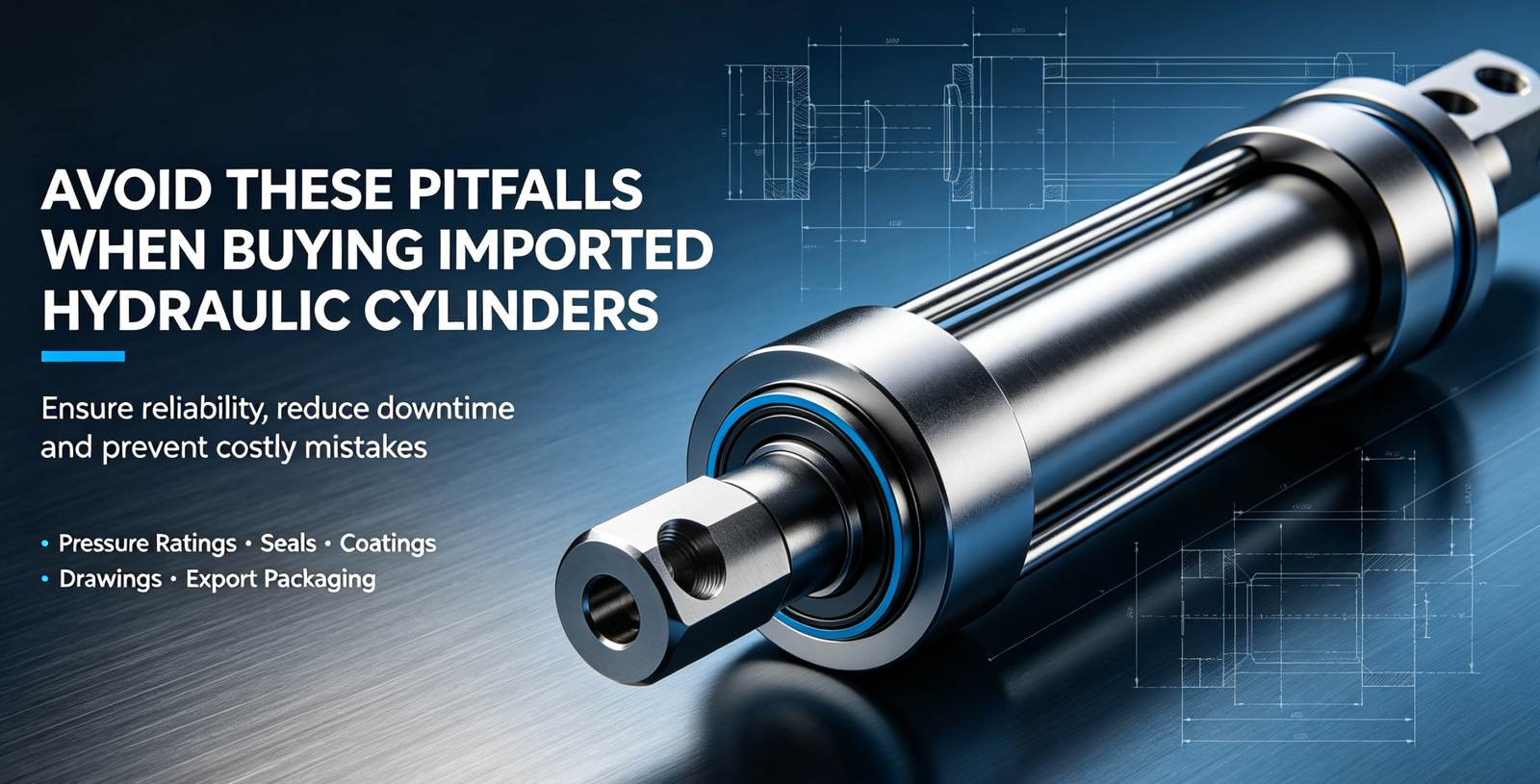
Are you considering purchasing imported hydraulic cylinders for your equipment, only to worry about potential quality issues or costly downtime? Many buyers face the problem of unreliable components, leading to operational headaches and unexpected expenses. By understanding common pitfalls, you can avoid these frustrations and ensure your hydraulic systems perform flawlessly.
Buyers often run into five issues when purchasing imported hydraulic cylinders. They include overlooked impact load, mismatched seals, substandard rod coatings, incomplete drawings and rust-prone sea packaging.These issues primarily stem from a critical information gap between buyers and suppliers regarding actual operating conditions.
I’ve seen firsthand how easily these challenges can arise. But with a strategic approach and better communication, you can overcome them. Let’s delve into each pitfall and discover how to navigate these complexities.
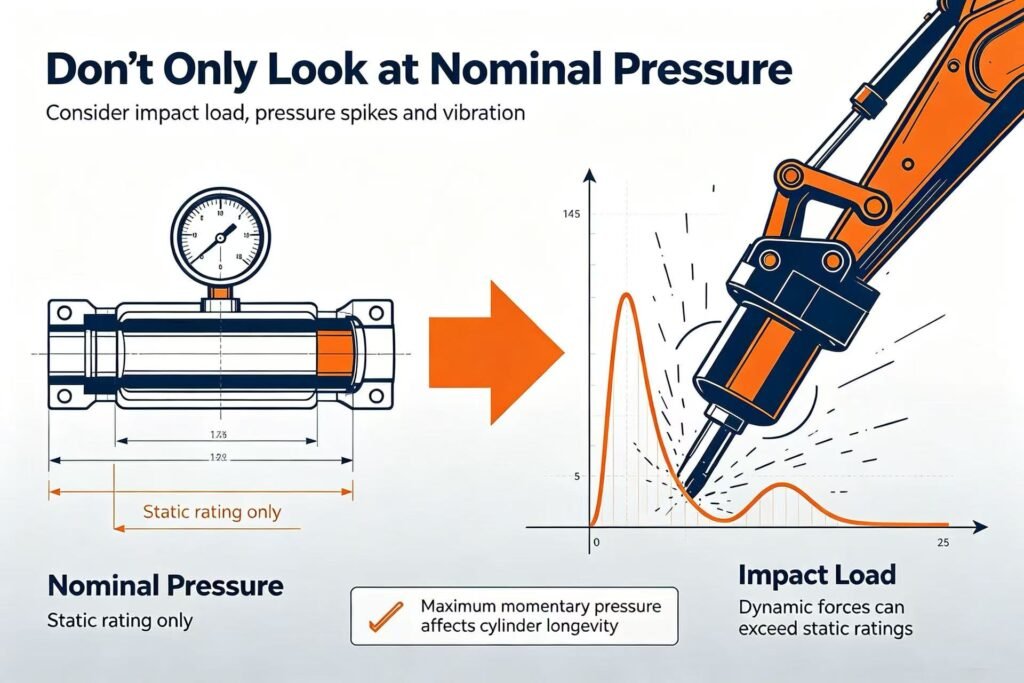
Only Focusing on Nominal Pressure for Imported Hydraulic Cylinders, Ignoring Impact Load?
Do you believe selecting an imported hydraulic cylinder based solely on its nominal pressure rating is sufficient for your application? Many buyers make this mistake, leading to premature failure and costly repairs. This oversight can quickly turn a cost-saving measure into a significant expense.
Many buyers only check a cylinder’s nominal pressure. They ignore dynamic impact loads and pressure spikes, which will trigger structural fatigue and early breakdowns. It’s crucial to assess the maximum momentary pressure encountered during operation, not just the continuous working pressure, for optimal cylinder longevity.
When I’m evaluating a hydraulic cylinder, I always consider more than just the data sheet’s listed pressure. The underlying truth is that an imported hydraulic cylinder might be perfectly rated for nominal pressure. But if the supplier isn’t aware of extreme dynamic forces, they cannot recommend the correct design or material. This ‘information gap’ is a core reason why buyers face issues; they might provide only static equipment parameters, inadvertently omitting crucial details about real, harsh working conditions. This leads to an under-spec’d cylinder that simply cannot handle the true demands of the application, irrespective of the supplier’s initial quality.
Mismatched Seals Unsuitable for Actual Working Conditions?
Are you confident the seals in your imported hydraulic cylinders are designed for your specific operating environment? Improper seal selection is a silent killer for hydraulic systems, leading to leaks, performance degradation, and frequent replacements. This often overlooked detail can compromise your entire setup.
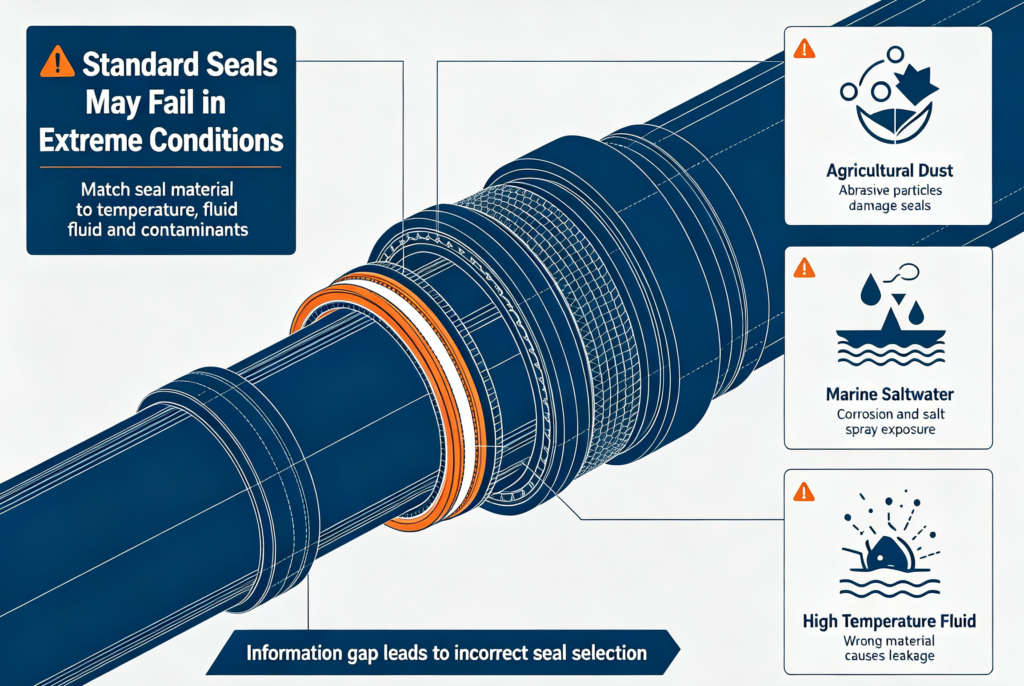
Buyers often receive mismatched cylinder seals without full working condition details.Seals fail fast when they do not match your temperature, hydraulic fluid and site contaminants.Share all operating parameters clearly, so suppliers can pick durable seal materials for your equipment.
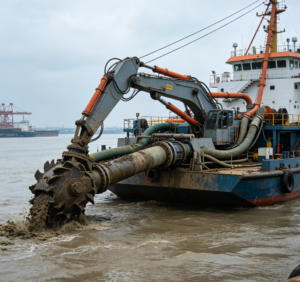
From my experience, one of the most frequent issues is when a buyer expects a standard seal to perform under conditions it wasn’t designed for. For example, a cylinder might be used in an agricultural setting with abrasive dust, or in a marine environment with saltwater exposure, but the supplier was only told “standard industrial application.”
This lack of detailed information—another symptom of the ‘information gap’—means the supplier, however well-intentioned, cannot match the seal material and design to the actual extreme conditions. The result is a high-quality imported hydraulic cylinder that fails not because of manufacturing flaws, but because of incorrect component matching based on incomplete operational data.
Substandard Piston Rod Coatings Trigger Corrosion & Wear?
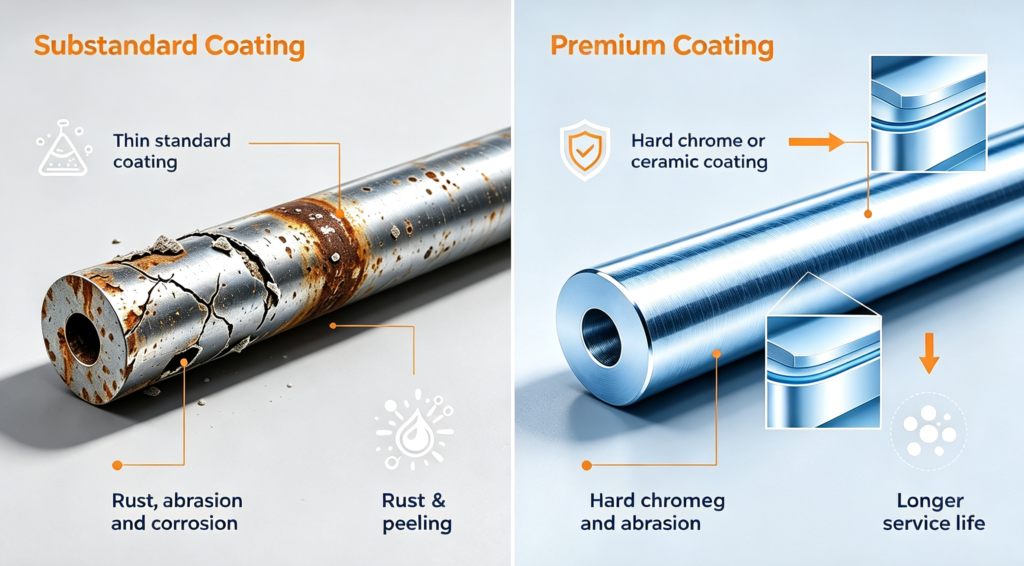
Is the piston rod coating on your imported hydraulic cylinder truly robust enough for its intended use? A common pitfall is receiving cylinders with inadequate coatings that quickly succumb to corrosion and wear, significantly shortening the cylinder’s lifespan. This can lead to costly maintenance and downtime.
Substandard piston rod coatings on imported hydraulic cylinders can rapidly degrade due to corrosive environments, abrasive particles, or inadequate hardness, leading to rod damage, seal failure, and fluid contamination. High-quality chrome plating or advanced ceramic coatings are critical for durability, requiring clear communication of environmental stressors during procurement.
I’ve observed that the quality of piston rod coatings is often directly tied to the level of detail provided by the buyer. If the supplier isn’t informed about harsh chemical exposure, frequent pressure washing, or constant abrasion, they might opt for a standard, more cost-effective coating.
This isn’t necessarily “cutting corners”; it’s a response to an incomplete picture of the operating environment. The ‘information gap’ means that while the supplier provides an imported hydraulic cylinder that meets a basic specification, it ultimately fails in real-world extreme conditions because the crucial context for material and coating selection was missing. The chain reaction from incorrect selection extends to premature corrosion and wear.
Incomplete Drawing Data Results in Assembly Problems?
Do you meticulously check every dimension and specification on the drawing for your imported hydraulic cylinder? Receiving a cylinder that doesn’t fit your existing machinery due to incomplete or inaccurate drawing data is a frustrating and costly pitfall. This can halt production and require expensive rework.
Incomplete drawing data for imported hydraulic cylinders frequently leads to mismatches in mounting dimensions, port locations, and stroke lengths, causing significant assembly problems and requiring costly modifications.
Providing precise, comprehensive technical drawings and confirming all critical interfaces is paramount to ensuring a seamless fit and avoiding operational delays.
In my line of work, I’ve noticed that drawing discrepancies often arise when buyers provide only “static parameters” of their equipment, or even rough sketches, rather than comprehensive engineering drawings.
This ‘information gap’ means the manufacturer of the imported hydraulic cylinder might interpret missing details or use their standard conventions, which then clash with the buyer’s unique application. It’s not a deliberate mistake on either side but a failure to fully convey critical installation requirements.
The result is an otherwise functional cylinder that simply cannot be integrated, demonstrating how a lack of upfront detailed communication can derail the entire procurement process.
Poor Export Packaging Leads to Rust During Ocean Shipment?
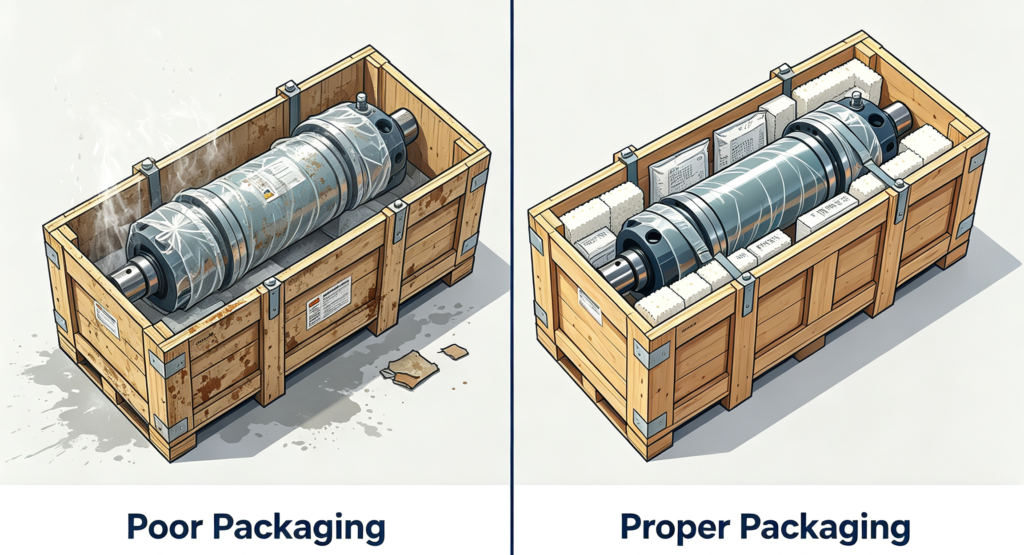
Are you sure your imported hydraulic cylinders will arrive free of rust and damage after a long ocean voyage? Inadequate export packaging is a silent threat, exposing your valuable components to corrosive elements during transit. This can result in costly rejections and delays before the cylinder even reaches your facility.
Poor export packaging for imported hydraulic cylinders, particularly during ocean shipment, leaves components vulnerable to rust, moisture damage, and physical impacts.
Proper anti-corrosion treatments, robust crating, and sealed protective wraps are essential to safeguard the cylinders, preventing surface damage and ensuring they arrive in pristine, ready-to-install condition.
I’ve learned that even the highest quality imported hydraulic cylinder can be compromised before it leaves the port if the packaging isn’t tailored to the shipping conditions. This again ties back to the ‘information gap’.
If a buyer doesn’t specify the duration of transit, the climate of the destination, or potential exposure to humidity, the supplier might use standard packaging that isn’t robust enough for severe marine conditions.
While the supplier built a good product, the lack of detailed shipping context leads to rust and damage. This pitfall highlights how all stages, from material selection to final delivery, are interconnected and dependent on a holistic understanding of the cylinder’s journey and application.
Frequently Asked Questions
How can I ensure my imported hydraulic cylinders match my exact needs?
To ensure a precise match, provide your supplier with comprehensive operational data, including nominal and peak pressures, temperature ranges, fluid types, environmental conditions (e.g., dust, chemicals), duty cycle, and detailed installation drawings. This minimizes the ‘information gap’.
What certifications should I look for in an imported hydraulic cylinder supplier?
Look for ISO 9001 certification for quality management. Depending on your region, CE or TUV certifications might also be crucial for compliance. These demonstrate a commitment to quality and international standards.
Can custom imported hydraulic cylinders be cost-effective?
Yes, custom imported hydraulic cylinders can be highly cost-effective in the long run. While initial costs might be slightly higher, a perfectly matched cylinder avoids costly failures, downtime, and frequent replacements, leading to superior overall value and performance.
Conclusion
Navigating the complexities of sourcing imported hydraulic cylinders doesn’t have to be a minefield. By understanding these five critical pitfalls—from inadequate pressure considerations and mismatched seals to substandard coatings, drawing inaccuracies, and poor packaging—you can proactively prevent costly mistakes.
Remember, the root cause of most issues isn’t a supplier cutting corners, but rather an ‘information gap’ where crucial operational details are inadvertently overlooked.
By providing comprehensive information about your application and working conditions, you empower your supplier to deliver a truly high-performance and reliable solution.
Ready to secure high-quality, perfectly matched hydraulic cylinders for your equipment? Contact us today! With over 30 years of experience as a specialized hydraulic cylinder manufacturer in Changzhou, we pride ourselves on delivering customized, high-performance, and durable hydraulic solutions tailored precisely to your unique needs, ensuring seamless operation and long-term reliability.
- Industry standard guide: Professional fluid power training & specification standards
- Technical reference for piston rod coating: Parker’s chrome plating performance guide
- Global cylinder design specification: Bosch Rexroth hydraulic cylinder design handbook